

Julian Assange, the founder of Wikileaks, was arrested by police in London after being expelled from the Ecuadorian Embassy where he was protected since 2012. The United States immediately requested his extradition and published the list of charges. who weigh against him.
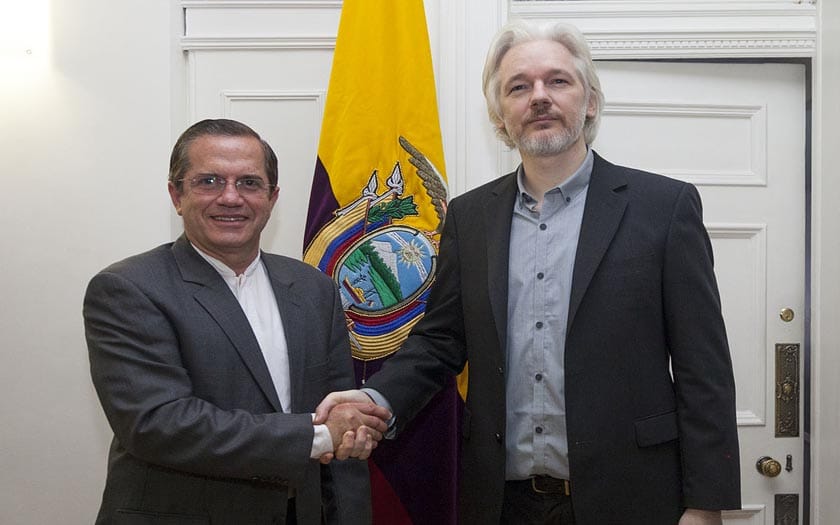
Julian Assange, the founder of Wikileaks, was arrested on Thursday, April 11, 2019 in London, in the Embassy of Ecuador where he was granted asylum in 2012. British police say it is the ambassador of Ecuador he himself who invited the authorities to pick the 47-year-old man, who appears physically depressed after his expulsion, is taking over Le Monde. Ecuadorian President Lenin Moreno confirmed that he had withdrawn Assange's right to asylum and his Ecuadorian nationality acquired in December 2017, claiming that he had not been subjected to any external pressure and referred to "repeated violations of international conventions and cohabitation protocols". .
Julian Assange risks extradition to the United States
In the process, the United States made a request for extradition to Scotland Yard, the London Police Headquarters. They also released charges against the founder of Wikileaks, including computer piracy of confidential data and the publication of secret documents of US intelligence agencies and diplomacy with the help of Chelsea Manning.
The case Julian Assange interests three countries in particular. Sweden first, where he is accused of rape and sexual assault. A victim's lawyer has indicated that she wants to reopen the investigation, even though the facts are now outlawed. The United Kingdom next, who considers that he violated the conditions of his parole by taking refuge in the Embassy of Ecuador while the authorities were studying a possible extradition to Sweden for the case cited above. And of course the United States, who feeds the most grievances against him. The first hearing of Julian Assange takes place from 11 April 2019 in a London court. History to follow.
